Bignonia radicans

Bignonia radicans is a beautiful, deciduous ornamental garden vine. It is a vigorously growing woody vine that climbs by aerial rootlets which will cling to just about any supportive surface. It grows primarily for its attractive flowers and its ability to rapidly cover structures with attractive evergreen foliage. Its a fast growing, heavy flowering beautiful plant. It grows up to 30 feet tall.
Bignonia flowers are incredibly beautiful and bloom in clusters. The blooms are red or orange, trumpet shaped with yellow throats.
Once established this plant doesn't need to be watered or fertilized beyond what nature provides. This plant can withstand long periods of drought even in growing season and keeps blooming.

How to grow Bignonia radicans:

Growing this plant is a simple process using seeds or a soft wood stem cuttings.

By seeds:
 
1) Plant the seeds in a fast draining soil filled with a mixture of peat, coarse sand and petite.
2) Bury each seed one to two inches below the surface of the growing medium and keep the soil moist.
3) The seeds germinate and emerge from the soil within three weeks of planting.
4) After the plants become firmly established transplant them in a sunny location in the garden.

By soft wood stem cuttings:

1) Cuttings with three joints can be detached from the well established plant by using a sharp knife.
2) Insert them in a propagating pot or case where they should form roots in 6-10 weeks.
3) Once they have formed sufficient amount of roots, they can be potted individually in small containers and eventually transplanted in the desired location outdoors.  


White Spider Lily

Spider lilies are ornamental garden plants grown for their famous flowers. Their elegant white flowers make the spider lily plants a joy to grow in the gardens. They are very exotic looking plants.
They are hardy, low maintenance, long lived and beautiful ground covering plants. Their leaves are dark green, long and strappy and held slightly upright.They can be planted in a semi shaded position under light canopy of trees or palms. They are spectacular house plants.
The flowers have long, slender, white petals that radiate from a round center, giving the whole bloom a spider like look. The flowers are delightfully fragrant, with up to 8 flowers blooming on each flower stalk at a time. The biggest flush of flowers occurs at the start of the rainy season. Flowers open in the evening emitting their perfume overnight.
Spider lilies require very little care and they are the easiest growing flowering plants. These plants once grown take root very fast. They grow in full sun and tolerate a range of soil conditions.

How to grow spider lilies:
 
Spider lilies are usually grown from bulbs.

From bulbs:

1) Mix a Two inch layer of compost in to top 8 inches of soil in a well drained but moist garden bed.
2) Plant the spider lily bulbs with the tip of each bulb 4 inches beneath the soil surface. Space the bulbs 8 inches apart in all directions.
3) Water the soil immediately so it settles around the bulb.
4) Cover the bed with a two inch layer of soil. Water the bulbs about once weekly so that water doesn't dry out completely.


Allamanda

Allamanda are popular ornamental garden plants. They are fast growing, luxuriant, colorful, evergreen, climbing shrubs. They are grown for their large, showy colorful flowers. This plant has leathery evergreen leaves arranged in whorls along the stem and bright beautiful flowers. It can be trained to cover fences and arbors. It is a good container plant.

Allamandas have glossy deep green leaves that provide the perfect foil for the flamboyant flowers. The dramatic trumpet shaped flowers feature a widely flared throat and five large overlapping petals, usually golden yellow or pink or lavender or red in color. The clusters of trumpet shaped blossoms appear on and off most of the year.

This plant likes a fertile soil and regular watering. Pruning encourages growth, new flowering  and shape the plant to the desired shape.  

How to grow Allamandas:

Allamandas are usually propagated by stem cuttings.

By stem cuttings:

1) With a clean sharp knife  cut six inch stem cutting from fresh new growth which has at least three or four fully formed leaves at the tip. Remove all the leaves and buds from the lower half.
2) Fill a pot with equal parts of moist clay, petite and peat moss.
3) Plant it in the prepared starting pot and water enough to evenly moisten the surface soil and place it in a warm, bright area.
4) The cutting will root within 2-4 weeks.
5) Transplant the rooted cutting in a permanent place in the garden and water it everyday.
6) Feed the young plant a water soluble fertilizer throughout the growing season.  


Jasmine

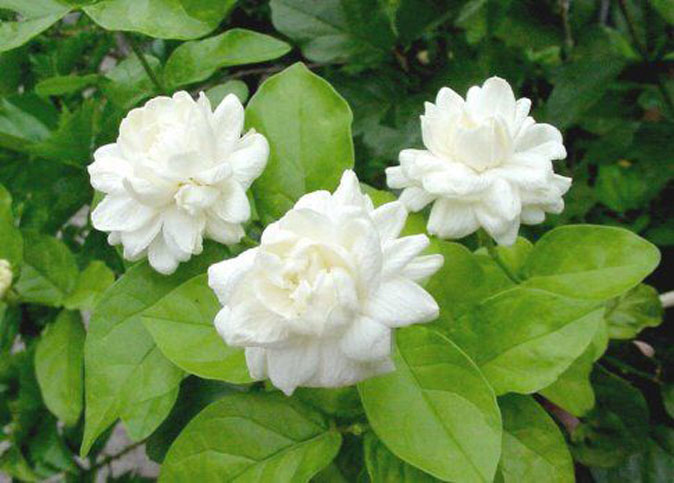
Jasmine is a sweet smelling  ornamental garden plant renowned for its beauty and distinctive fragrance. They are bushy shrubs or climbing vines grown for their shining leaves and beautiful clusters of fragrant flowers.
Jasmine is a very popular flower around the world because of its unique fragrance.These flowers are white and have 6 to many petals.They are often strong and sweet scented. The buds of jasmine plant have a stronger smell than the flowers of the plant.When the sun has gone down the scent of the jasmine flower is strongest and is incredibly sweet.They have an exotic, sweet fragrance that permeates the air on warm summer evenings. The plants bloom all summer.

This plant likes a spot that will provide cool conditions with plenty of light and air. They grow well in moist, well drained sandy loam clayey garden soil with moderate level of fertility. They prefer full sun to partial shade and warm site. Adding a leaf mold to the soil makes a better growth of the plant.

How to grow Jasmine plant:

Jasmine can be propagated by hardwood cuttings or layering or cultivars

By hard wood cuttings:

1) With a sharp knife cut healthy 6 inch stems from the tips of jasmine branches.
2) Prepare a pot with soil and compost mixture and push the stem cuttings into the soil.
3) Place the pot in a sunny spot and water it well. Roots will generally develop in 4-5 weeks.
4) Transplant the rooted cutting into a permanent spot in the garden.

By tip layering:

1) Scrap off a ring half to one inch wide, about 4-5 inches back from the tip of the stem.
2) Bend the tip of the stem to the ground, bury and cover the wounded portion with 2-3 inches of soil.
3) Keep the soil even to encourage root development.
4) Cut free the rooted tips and plant them in a permanent place in the garden.

By cultivars:

1) Buy the jasmine cultivar that is right for your garden. Jasmine plants are available in pots at the nurseries.
2) Find a suitable spot in order for your jasmine to thrive. Prepare the soil with 2 inch layer of compost.
3) Dig a hole and fill it with water and let it drain.
4) Slide the jasmine plant gently and set it inside the hole. Lightly pat soil around the base
 of the plant to hold it in place.
5) Water the soil around the base to help the plant to settle. Add more soil to keep the plant erect.


Mussaenda

Mussaenda is a beautiful ornamental garden shrub. The appeal of mussaenda lies in its extraordinary inflorescence, the flowering part of the plant. The flower itself is a tiny simple yellow star but parts surrounding the flower are stunning, extraordinary pendent bunches of soft beautiful colored sepals with each up to 10 cms long. The bloom colors can be pink, white, creamy white, red or yellow. The leaves are mid green with soft velvety feel.
Mussaenda bushes are ever green. Once established these shrubs look absolutely spectacular. They are certainly worthy including in the garden, as they are very hardy and will flower profusely for years. A good prune will help promote the plant growth and  result in a much better flowering.

How to grow Mussaendas:
These plants require very warm temperature for propagation. They survive in organically enriched fertile soil.
They are propagated by stem cuttings or you can purchase them in your local nursery.

By stem cuttings:
These plants can be propagated from cuttings about 4-6 inches long taken from the tip of strong healthy shoots. Early morning is the best time to take cuttings.
1) With sharp knife cut the terminal parts of stem and remove the flowers, flower buds and leaves  from the lower one third of the cuttings.
2) Fill pots with sterile, damp, well draining garden soil.
3) Make a holes in the soil with a stick and insert the cuttings into the holes. Tamp down the soil to hold the cuttings upright and water them.
4) Cuttings rapidly put forth roots. Transplant the rooted cuttings in a permanent location.

Select and purchase a small mussaenda bush that will fit completely into the landscape when mature.
1) Find a planting site for the mussaenda where it will get direct sunlight at least 6 hours each day.
2)Add organic matter such as compost or leaf mold to the soil.
3) Dig a planting hole twice the diameter of the mussaenda root ball and place the mussaenda roots in the hole and back fill with the soil that was removed from the hole.
4) Water it generously to settle the soil around the roots. Add more back fill soil on top.
5) Water the bush as often necessary to keep the soil moist.
6) Sprinkle slow release balanced fertilizer granules around the bush 6-8 weeks after planting, when it begins to grow new leaves.   


Artabotrys odaratissimus

Artabotrys is an ornamental woody bush climber, commonly grown in the gardens for  its exotic fragrant flowers. It grows 8 - 20 feet tall. It has dark green, glossy leaves and the flowers are beautiful. The flowers are greenish/yellow and very often hidden by the leaves.

The color of the flower is changed over the course of the flowering from delicate green to dark yellow. Flower has a wonderful smell. It smells most in the evening and remains an intoxicating presence all the way until dawn. This plant flowers year round. People like these flowers for their unusual fragrance.

These woody shrubs can climb on trellis.fence or on top of special structures. If left by themselves this climber will grow on top of itself forming a mound. This bush is evergreen and can be cut regularly, to keep in shape.

How to grow Artabotrys:
This plant can be propagated by stem cuttings and air layering.

By stem cuttings:

1) Early morning is the best time to take stem cuttings. Keep the cutting cool and moist until  they are stuck.
2) With a sharp knife cut 4-6 inches long terminal parts of stem and remove leaves from lower one-third to one-half of the cutting.
3) Fill a pot with sterile low fertility well-draining medium( peat and sand mixture).
4) Insert the cutting one third to one half their length into the medium and water it.
5) Cutting rapidly put forth roots and begin to grow.
6) Transplant the rooted cuttings into larger pot or in a permanent location.

By air-layering:
Air layering is a propagation method for woody plants that allows you to root branches while still attached to parent plant. It is useful for plants that are hard to propagate by cuttings.
1) Choose the branch you want to root. It should be at least 16 cms and leafless.
2) Make an upwards-slanted cut about half way to two thirds through the branch.
3) Take a small piece of plastic and insert it into the cut.
4)Take some damp moss and wrap it around the cut.
5) Holding the moss in place with one hand, wrap a plastic sheet around it.
6) Tie the plastic sheet tightly below and above the ball of moss.
7) After a couple of months roots grow through the moss. When you can see well-developed roots, cut the branch below the moss ball.
8) Remove the plastic  and pot the new plant up using good quality potting mix.
9) Transplant the new plant in a permanent location after 2 months.


Gardenia jasminoides

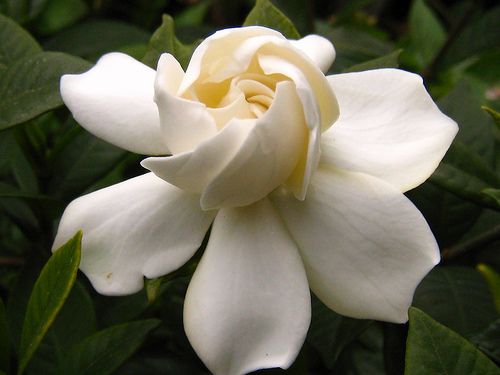
Gardenia are beautiful evergreen shrubs, grown as popular ornamental  plants in warm regions. They are admired for their glossy green foliage and fragrant blossoms  They grow from 2-8 feet tall and wide. They grow into a round shape with dark green foliage.
Gardenia blossoms are large, creamy white and intensely fragrant. They contrast beautifully with shiny, leathery. dark green leaves. Gardenia is primarily valued for  its highly scented blossoms.
No plant expresses the grace than Gardenia.
Gardenia do well in large pots. Plant a gardenia near a window where you can enjoy the flowers fragrance. It prefers partial shade, well drained soil with plenty of organic matter.

How to propagate Gardenia: 

1) Select a site with full sun to light shade and moist rich well drained soil.
2) Dig a hole  only as deep as the root ball and 2-3 times as wide.
3) Carefully remove the plant that you have purchased in your local nursery from the container  and set it in the hole.
3) Fill the hole with soil mixed with a small amount of compost, then water it well to settle the soil.
4) Let the water drain, then fill the remainder of the hole with soil and water thoroughly

From cuttings:

1) Propagating Gardenia from cuttings start with getting the gardenia cuttings.
2) The cuttings should be at least 5 inches long and taken from the tip of the branch,
3) Take all the leaves  off the cutting except for the top two sets.
4) Prepare a pot to root the gardenia cutting in. Fill the pot with potting soil  and sand. Dampen the soil and sand mixture.
5) Stick you finger in the soil and sand mixture to create a hole. Place the gardenia cutting in the hole  and then back fill the hole.
6) Place the pot in bright but indirect light.
7) Keep the soil damp until the cuttings root. The cuttings will root in 4-8 weeks.

Anyone can propagate gardenia with a little care and some basic supplies. Once you understand what a gardenia needs to survive, growing them is very rewarding. Prune gardenia to encourage  the flowers to bloom nicely. 


Gerber Daises

Geber daises are ornamental garden plants commonly grown for their bright and cheerful daisy like flowers. They can be used in landscapes as bedding plants for borders and flower beds or as potted plants.
The flowers hardly look real. They bloom in nearly every color and produce fantastically large flowers on long thick stems. They last for a week or more in the vase, making them a favorite of flower arrangements. These beautiful blooms are perfect for any occasion.

How to grow Gerberas:

Growing Gerber daisy plant is possible from seed , seedlings or divisions. Areas with full sun or partial sun are best for growing these precious plants. They tolerate mild temperatures.
The most inexpensive way to produce gerberas is from seeds obtained from reputable seed suppliers. Seedlings are easy to find in nurseries.

Growing from seeds and seedlings:

1) Seeds should be germinated in an artificial growing medium that is sterile, light and have water retention capacity. It can be purchased in garden supply store.The material often have fertilizer incorporated.
2) The medium can be placed in pots that have drainage holes.
3) Make shallow rows in the medium, sow seeds in the rows. cover lightly with extra medium and water carefully. Check the medium daily for moisture and  signs of seed germination.
4) Germination usually takes 2-3 weeks. When large enough to handle, seedlings can be transplanted in to flower beds or large pots.

Growing from divisions: 

1) When first signs of new growth are seen, plant can be divided. Use healthy plants. divide the root stock and crown into 4 pieces each with one growth bud attached.
2) Alternatively, detach young basal shoots, pot them up carefully in sandy compost and place in a propagator until well rooted, then pot up or plant into a bed or border.  


Lotus

Lotus is one of the most majestic ornamental water plants to have in a garden. It is the most exotic of
all pond plants. These are beautiful water plants that represent  beauty and purity. They are one of nature's most beautiful creations. They existed on the earth for thousands of years. They grow in shallow and marshy waters.These plants flourish in a wide range of climates.The roots of Lotus plant are rooted in the soil under the water while the leaves float on the top of water surface.  The Lotus flowers are usually found on thick stems raising several centimeters above the water.
Lotus flowers are very beautiful. They are either pink or white in color. The petals are shaped like dagger and are arranged in several layers.  The flower is known by its sweet odor. It is very fragrant and the perfume will permeate the evening. The flower which lasts 3-5 days, opens in the morning and closes at night.

How to grow Lotus plant:
Lotus plants can be grown from seeds, tubers. You can purchase them in your local nurseries.

 From seeds:
1) Place the seeds into  a glass of warm water and change the water everyday.
2) Once you see Lotus roots emerge, put them in small pots filled with good garden soil.
3) A depression should be made in the soil and one seed should be set in the depression.,
4) Cover the roots gently with soil or gravel.
5) When the Lotus leaves started to grow, keep them free of soil and set the plant in warm water up to two inches deep.
6) Plant your lotus in a larger container without drainage holes and give it as much light as possible.
7) A lotus plant that is established can be fertilized.every 3 or 4 weeks during the growing season.

From tubers:
1) Float the tubers in a large bowl. fill the bowl with warm water ntill it is nearly full and rest the tuber on the surface of water..
2) Place the bowl in a warm place and change the water very 3-7 days.
3) Plant the tubers with in few weeks after the tuber sprouts.
4) Carefully take the sprouted tuber out of the bowl and place it in the middle of your new wide pot or bowl
5) Carefully  put good garden soil  around the tuber and fill the pot 1/3rd with soil.
4) Add some gravel above the soil and fill the bowl with water.
Lotus  can be grown in a wide variety of ways from pots to a pond in your back yard

Lotus flowers, young leaves and the roots are edible and are used in cuisine. They are rich in fiber and vitamins of B group. They are rich source of iron and other important minerals. 


Climbing Roses

Climbing roses are ornamental garden plants grown for  their beautiful flowers. These modern roses are trailing shrubs. Their slender stems can be trained to ascend trellis. The stems grow long  and arching canes  that can be tied up and trailed along fences, walls and trellises. They form a colorful backdrop  for borders and they are fantastic for covering structures. They transform bare fences, walls and trellises into beautiful focal points.
These roses show greater resistance to diseases.
Climbing roses have large flowers similar to other garden roses which are typically held singly or in small groups and they usually have the ability to repeat blooms.
Climbing roses are grown for their beautiful flowers which range in color from white through various tones of yellow and pink to dark crimson and maroon and most have a delightful fragrance.

How to grow climbing roses:
Climbing roses prefer full sun, so the spot you plant them in should receive 6 hours of sun per day. These roses need well draining nutrient rich soil.

1) Choose a spot with plenty of space. Remove 6 inches of top soil and replace it with soil from another part of your garden.
2) Mix the new soil generously with compost and allow to settle for 2-3 weeks.
3) Dig a hole 18 inches wide. It should be large enough for the roots to spread out.
4) Sprinkle some rose fertilizer at the base of the hole.
5) Before planting a bare root rose remove and discard the packing material and soak the roots for a few hours.
6) Place the rose plant in the hole, carefully spread the roots out.
7) Fill the hole with water and let drain.
8) Add soil back in the hole until roots are fully covered and the soil is leveled.
9) Tamp down the soil with your hands gently.
10) Newly planted roses need 1 inch of water per week throughout their first growing season.
Climbing roses grow vigorously and bloom more prolifically if fertilized several times during growing season. They are excellent for limited flat space garden area that have a lot of open vertical space to climb up and elegantly drape the area with beautiful blooms.


Hibiscus rosa sinunsis - China Rose - Shoe flower

Hibiscus is an ornamental flowering garden plant that can bloom almost year round. It is a large shrub found in the warm regions all over the world.
 This plant is best known by its beautiful flowers.  The flowers are large, trumpet shaped without scent. Flower consists of 5 or more petals that can be red, white, orange, pink, yellow, purple or blue in color. These blossoms only last a day, but they are quickly replaced by new blooms.

How to grow Hibiscus:
Growing hibiscus is easy way to add beauty to your garden. You will be rewarded with many years of  lovely flowers. You can buy small hibiscus plants in the local nurseries
When buying hibiscus, look for plants that have lots of buds and healthy leaves.
It grows on well drained soils in the sunny areas. They prefer soils that are rich in organic matter.

From cuttings:
Select a lateral soft wood stem with mature leaves of the hibiscus plant and cut it with a sharp knife.
1) Fill the pot or the container with moist potting soil mixed with some compost.
2) Make a hole in the potting soil with your finger and step the cutting in the hole.
3) Set the cutting deep enough in the soil. Gently firm the soil around the cutting.
4) The cuttings will root in 2-3 weeks.
Growing a hibiscus plant in a container or a pot  will allow you to move the plant to ideal location.
5) Select a site with full sun and well drained soil in the garden and dig holes 2-3 apart and as deep as the root ball.
6) Carefully remove the plant from the container and set it in the hole.
7) Fill the hole half full with soil, then water it well to settle the soil. Let the water drain, then fill the remainder of the hole with soil and water thoroughly.
8) feed the plant with compost twice a month, during growing season and prune as necessary to control plant size.
9) When hibiscus are in their blooming stage,they require large amounts of water, They need daily watering in warm weather.


Chrysanthemums

Chrysanthemums are beautiful ornamental garden plants, ideal for growing in pots and containers.
This plant is excellent as ground cover or border plant since its foliage is attractive and remain green all year. As a landscaping plant, the chrysanthemum makes a beautiful display for the home garden.

Chrysanthemums are the most popular flowers next only to roses. They are favorites among home garden because of the colorful flowers. The flowers are available in a wide array of colors - from white to yellow and gold, pink, orange, bronze, deep red, maroon, violet and purple. Some are a mix of colors. They dominate a growing area with their many varied shapes, sizes and colors.
Chrysanthemums have a long flowering period. There are so many varieties of chrysanthemums today.

How to grow chrysanthemums:
Chrysanthemums are easy to be grown and are propagated by the divisions of plants and seeds. These plants can grow in any kind of soil, but they require a sunny weather for best performance.

By seeds:
Sow seeds in the already prepared garden soil, cover the seeds with a layer of potting soil.
The seedling appear 2-3 weeks and thin out after germination, They can be transplanted after about a month of sowing.

By divisions: 
1) Chrysanthemum plant should be divided to avoid overcrowding and to promote maximum flowering. They should be divided  when new growth appears.
2) Dig entire lump  and separate the plants with a sharp knife. Remove all the dead parts.
3) Replant the divisions as soon as possible in loose, well drained rich organic soil.
4) Young divisions will grow much faster and provide a better plant.

Care: 
Chrysanthemums should be watered regularly.
Seedlings should be pinched to make them bushy.
Fertilize when the plants are ready for blooming and discontinue fertilizing after flower buds are formed.
The faded Chrysanthemum blooms should be removed regularly as it helps prolong flowering.